Summary: Dentists often regret selling to Dental Service Organizations (DSOs) because the transition from ownership to employment can lead to a loss of control over practice decisions, daily operations, and future growth. While the financial payout might be attractive, the change in role and potential dissatisfaction with ongoing management issues can outweigh the benefits, especially for those with many working years ahead.
The usual advice is to compare the DSO offer with a private sale and choose the higher number. That advice fails for dentists who still want to lead the practice, shape care, and spend many more years in the operatory, because regret usually starts when the check clears and the workday gets smaller.
Our position is direct: a sale built on future equity, promised support, or status is too thin unless the guaranteed cash and the post-closing role make sense on their own. A dentist can receive a strong payout and still dislike the daily life that follows, especially when ownership becomes employment and the same HR, billing, and staffing problems remain.
Dentists should treat a DSO sale as a career redesign, not a transaction. The red flags are easier to see before the letter of intent than after the buyer controls the schedule, reporting, employment terms, and next sale conversation.
Why dentists regret selling to a DSO after the check clears
The first disappointment is usually control, not cash. A dentist who built a valuable practice often still likes leading people, choosing the pace of growth, and deciding what kind of dentistry belongs in the office, so an employee role can feel smaller even when the bank account is larger.
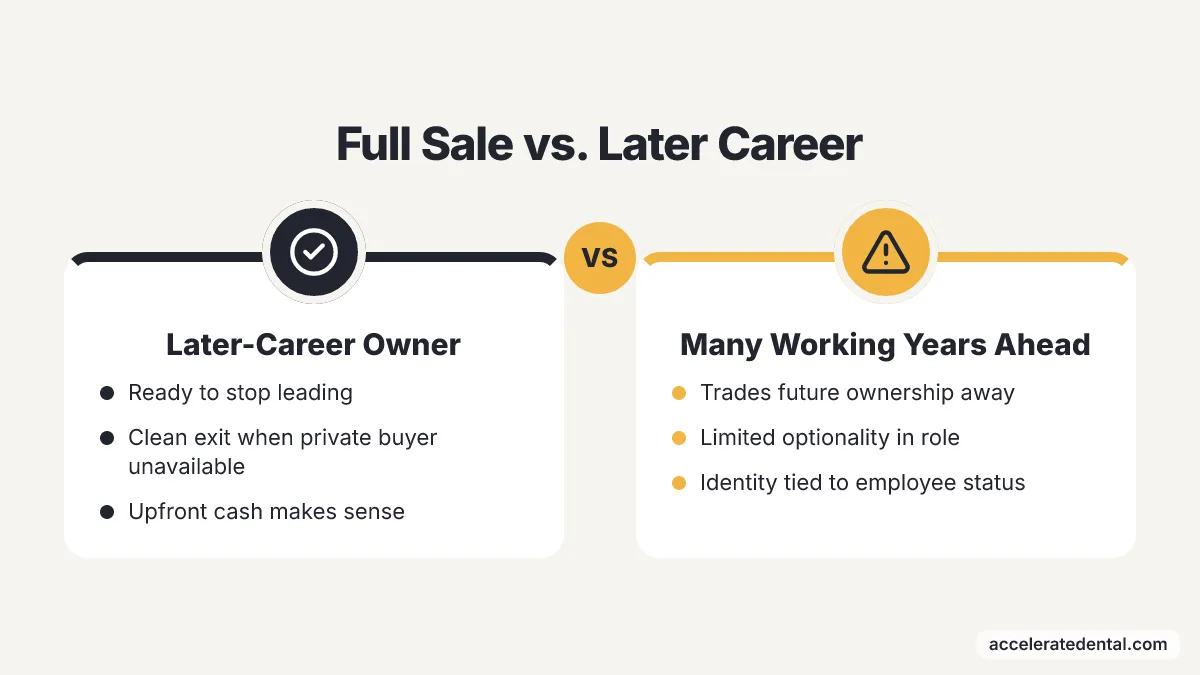
A later-career owner who is ready to stop leading the business may be well served by a clean sale, especially when a private buyer cannot absorb the practice. The same structure can be wrong for a dentist with many working years ahead, because the deal trades future ownership, optionality, and identity for a role that may last longer than the initial excitement.
Future equity deserves the hardest look. If the upfront cash does not make the deal worthwhile on its own, future parent-company stock should be treated as uncertain upside, not as money already earned, because the next buyer, recapitalization terms, or employment requirements can change the outcome.
What red flags belong in the first meeting?
A buyer who cannot explain who controls the next sale has not answered the deal question. The red flag is not growth by itself, it is growth designed around a future transaction that the dentist cannot influence.
Ask the buyer these questions before the valuation conversation takes over:
- Who owns the group, and what return timeline do those investors expect?
- Does the dentist receive equity in the practice, the parent company, or another entity?
- What happens to the dentist's equity if the group sells again?
- Which decisions move away from the dentist after closing?
- What support is actually delivered in HR, billing, insurance, marketing, and reporting?
- Which existing partner dentists can describe the support without a sales team present?
In November 2026, a GlobeNewswire release reported a dental group acquisition that added 12 practice locations and 47 doctors, which is why sale terms must address what happens when the buyer becomes the seller. A contract that looks attractive at closing can feel different if the dentist is asked to roll equity, accept new employment terms, or wait for a second payout that never arrives as expected.
What if the real problem is burnout, not ownership?
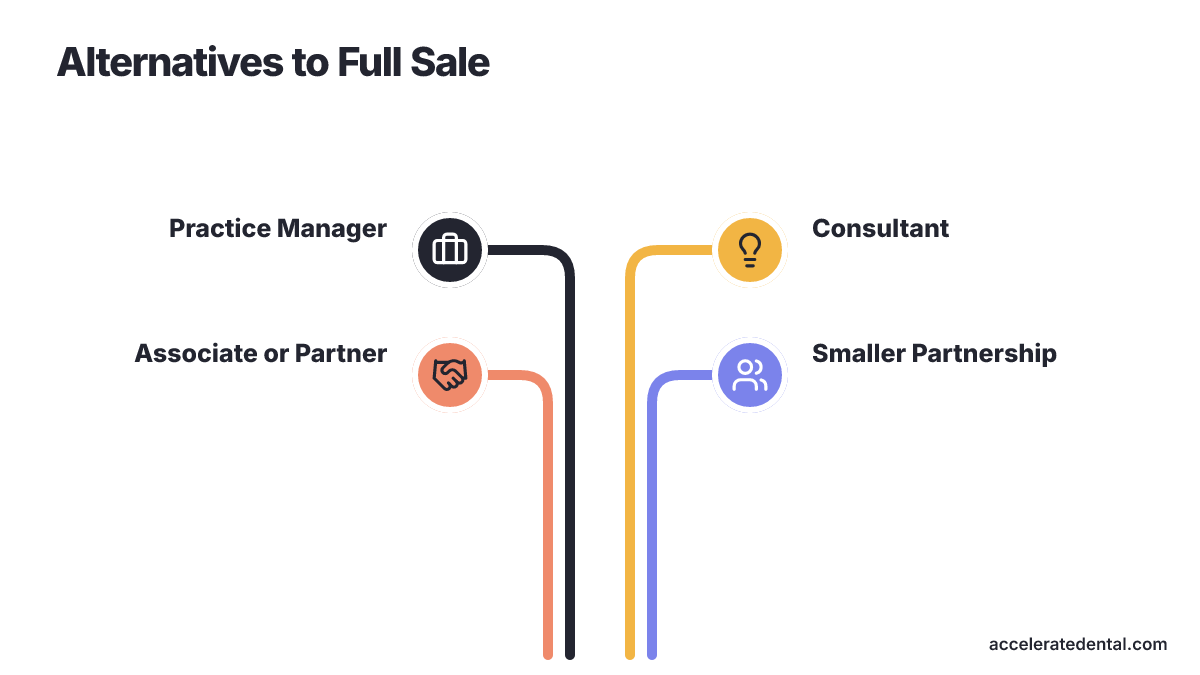
Staffing, insurance, HR, marketing, compliance, and billing pressure are real management problems, but a full sale is the most permanent way to solve them. A practice manager, consultant, associate, business partner, or smaller partnership model may fix the operational problem without giving away the ownership that created the opportunity in the first place.
Accelerate Dental is a dental partnership group, not a DSO, and our Accelerate Dental partnership model is owned by dentists, not private equity, and we are not for sale. We use a doctor-owned dental partnership model where dentists maintain a significant portion of their earnings and continue to lead their practice while receiving back-office support in various areas such as finance, HR, legal/compliance, marketing, operations, and insurance and fee optimization.
Dentists comparing sale options should separate relief from surrender. A dentist who wants help running the business may not need to stop owning it, and our view of a majority control DSO alternative starts with that distinction.
How should a dentist test the deal before signing?
A serious buyer should pass a working-session test before the letter of intent becomes momentum. The test is simple: make the buyer show the actual operating support, decision rights, reporting cadence, and post-closing role, not just the valuation slide.
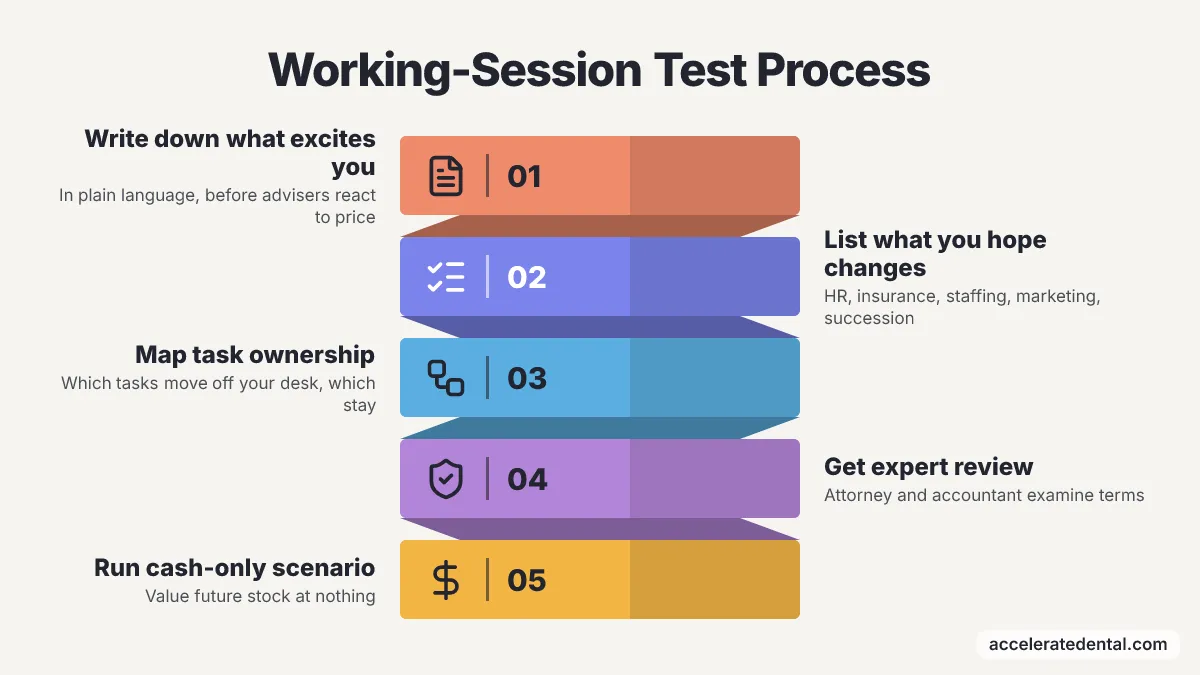
Use this process before signing:
- Write down what excites you about the offer, in plain language, before advisers react to the price.
- Write down what you hope changes after closing, such as HR work, insurance friction, staffing, marketing, or succession pressure.
- Ask the buyer to map exactly which tasks move off your desk and which ones remain yours.
- Have a DSO-experienced attorney and dental accountant review clawbacks, employment terms, equity structure, and change-of-control language.
- Run the cash-only case, where the future stock payout is valued at nothing.
- Speak with dentists already inside the group and ask what changed after the sales process ended.
Dentists who want a concrete example of choosing support without a traditional sale can read why Dr. Bradley chose partnership over a DSO path. The useful lesson is not that every dentist should make the same choice, but that the right structure should match the dentist's stage, appetite for leadership, and need for operational help.
Conclusion
A one-page decision memo is the right first step before any offer meeting. Write the role you want after closing, the decisions you refuse to give up, the support you need proven, and the guaranteed cash number that works without future equity upside.
A dentist who cannot make the deal work under that cash-only test should pause, even if the headline offer feels hard to refuse. A dentist who mainly wants relief from business pressure should compare partnership, management support, and succession options before treating a sale as the only exit.
When you have those notes ready, book a call and speak with one of our partner doctors.
Frequently Asked Questions
Why do dentists regret selling to a DSO?
Dentists often regret selling to a DSO because the transition from ownership to employment can lead to a loss of control over practice decisions and daily operations. While the financial payout might be attractive, the change in role and potential dissatisfaction with ongoing management issues can outweigh the benefits, especially for those with many working years ahead.
What are the red flags when considering a DSO sale?
Red flags include a buyer who cannot explain who controls the next sale, growth designed around a future transaction that the dentist cannot influence, and unclear support in HR, billing, insurance, marketing, and reporting. It's crucial to ask specific questions about equity, decision-making, and support before the valuation conversation takes over.
How can a dentist address burnout without selling to a DSO?
Burnout can be addressed by exploring options such as hiring a practice manager, consultant, associate, or business partner, or considering a smaller partnership model. These alternatives can help manage operational problems without giving up ownership, which created the opportunity in the first place.
What should a dentist do to test a DSO deal before signing?
A dentist should conduct a working-session test, asking the buyer to demonstrate actual operating support, decision rights, reporting cadence, and post-closing role. It's important to write down personal goals and concerns, have legal and financial experts review the deal, and speak with dentists already in the group to understand changes after the sales process.
What is Accelerate Dental's approach compared to a DSO?
Accelerate Dental uses a doctor-owned dental partnership model where dentists maintain a significant portion of their earnings and continue to lead their practice. They receive back-office support in areas like finance, HR, legal/compliance, marketing, operations, and insurance optimization, allowing them to retain control and avoid the pitfalls of a traditional DSO sale.
Related reading
- Why Dr. Bradley Chose a Dentist-Owned Partnership Over a DSO
- DSO Alternative for Dentists Who Keep Majority Control